Trump Against Venezuela: Oil Sanctions, TPS And Election Crisis
After returning to the White House, Donald Trump has been ramping up the pressure on Venezuela once more with further sanctions, confiscation of assets, and the grandma of them all, intercepting oil tankers that are already sanctioned. It is all about strangling the oil-based economy of Maduro, it is all about preventing the shadiness of money trails and then, he eventually, it is all about shaking things up in Caracas. Legally, humanitarianly and to regional security, it is a big deal and would have an impact that reverberates throughout the oil prices and migration patterns on a global scale.
Background: U.S.–Venezuela relations in one paragraph
The U.S and Venezuela have been on a rough ride long enough, particularly under Hugo ‛Chavez then, Nicolas ‛Maduro. Washington has imposed sanctions on them, diplomatic retaliation and even supported opposition leaders such as Juan Guaidó to oppose Maduro in 2019. Each new government of the U.S. switched the script of sanctions and legal actions, even discussing military measures, keeping the situation on the thin air.
What exactly has Trump done recently? — The escalation explained
Blockade of sanctioned oil tankers via the sea.
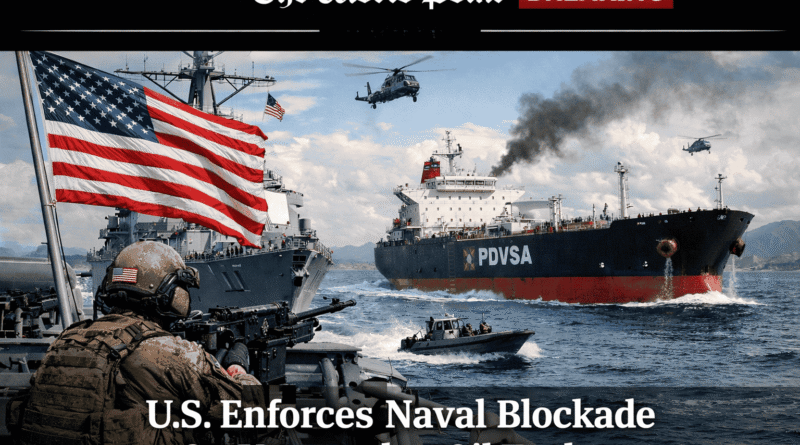
In mid-December 2025, Trump confirmed that the team was planning to impose a complete and utter blockade on the oil tankers already sanctioned and heading to or leaving Venezuela allegedly to choke the cash flow that sustains the Maduro government. It was a step to follow a series of vessel seizures to attempt to avoid sanctions and a new set of sanctions on Maduro supporters and vessels. The announcement caused the whole world to consider the legality and the financial consequences.
New punitive measures and property targeting.
Together with the blockade, the administration imposed sanctions on individuals within the inner circle of Maduro, his oil trucks, and businesses alleged to be evading the U.S. regulations. The scheme is their customary maximum pressure one– freeze their assets, reduce their oil revenues and isolate Maduro in the international market.
Labelling and military pose.
Trump has been briefing the Maduro regime on one side as a terrorism or narco-terrorist regime, and the U.S. has increased naval and Coast Guard presence off Venetian waters- demonstrating a more assertive approach that combines money-pressure with an explicit threat of force. Analysts caution that this combination increases the game.
Why the focus on oil — and what the blockade means?
Venezuela is more or less a petrostate, oil earns majority of the money to both the country and government. Cessation of oil deliveries (even to the gray zones) damages the cash line of Maduro. A successful blockade would reduce the state finances, empty the coffers and cause strain within the nation but it would also result in humanitarian spikes, visibility of oil prices and legal complications on the international law. Even partial disruption will push prices around the globe and get migration and the economy within Venezuela even further.
Ripple effects of the economy to consider:
- Oil price rise- boost short term spikes due to uncertainty in supply.
- Humanitarian squeeze – the less the government money, the less will be imported food, medicines and electric.
- Migration force -economic destruction tends to drive greater numbers of refugees to the neighbors and to the U.S.
Trump and Venezuela TPS — immigration fallout
TPS has been a savior to several Venezuelans in the U.S. as it does not allow their deportation back home where they are not safe. The Trump team amended the rules in 2025 and limited or eliminated TPS on certain countries, such as Venezuela – another human factor to the combat. The stricter immigration policies may complicate the assistance of the individuals, and may plunge the families that have established their lives in the U.S. into a turbulent water.
The claims and reality of the Venezuela election by Trump
Trump and his supporters continue declaring that recent Venezuelan elections were undemocratic, crooked, or rigged to keep Maduro in power, a time-tested statement that suits the U.S. policy since 2019. The white house relies on these allegations as a way of imposing sanctions and pressure as there is no true international legitimacy of Maduro and that the U.S. should intervene and bring democracy back. It is pointed out by the observers that such moves in the hands of one such individual usually end messing up the outcome- placing the dictator in a better position as opposed to spilling him.
Legal, diplomatic, ethical issues.
Is a blockade legal?
A naval blockade, particularly one that strikes the trade of a sovereign state, poses gigantic legal issues on the international law. Some believe that it might be regarded as a war move unless it is passed by the UN Security Council; others believe that boycotting and confiscating sanctioned vessels are valid methods of enforcing regulations against rogue nations. Other countries and Congress are already frowning.
Are sanctions effective?
Sanctions may take away resources of a regime, yet, they also do not have imaginary humanitarian consequences. In cases when oil exports, which is the largest source of funds in Venezuela, are struck, it may drive the state into the abyss and increase suffering in case there are not effective humanitarian channels. It has been recorded that sanctions are more effective when they are multilateral and targeted; one-man show will strike to smuggling and third-party purchase.
Local and geopolitical backlash
The neighbors in Latin America, energy markets around the world, and large competitors such as Russia and China who have been associated with caracas, will respond to the actions of the U.S. An extreme U.S. action has the potential to bring Venezuela closer to the embrace of those rivals or proxy conflict- difficult to resolve in the long run.
Humanitarian impacts- what common people in Venezuela have to go through.
With the loss of oil money, the tanker services go before our eyes. Medical institutions end up short of stocks, power networks collapse, and the import of food is reduced. It is the common citizens who end up being the victims of the blockade and the sanctions that deprive the government of purchasing medicine, maintaining utility services, or subsidizing imports. That puts a burden on the neighboring nations as the refugees run away to avoid the horrors, damaging the local stability and humanitarian organizations. NGOs and aid agencies are warning that human cost may be enormous without the explicit carve-outs on humanitarian and expedited direct aid.
Could this produce regime change?
The Trump administration is hoping that destroying the economic foundation of Venezuela will divide the government internally and assist in shifting the nation out of Maduro. A bit of history illustrates that sanctions and isolation have forced governments into reform, but in other instances they have merely bolstered the regime. Most commentators mention that the most sustainable way out is a negotiated political compromise, preferably to be achieved through credible internationally monitored elections and local players, instead of a one-sided economic squeeze that only brings short-term benefits but creates long-term turmoil.
What does the international community think?
Responses have been split:
- Pressure on Maduro has the support of allies and even a few Latin American states, but many are urging co-ordination via Multilateralism and Legal Waryness.
- International organizations and human-rights organizations insist on well-established humanitarian protection against human suffering committed to civilians.
- When it comes to the adversaries and Maduro supporters, such as Russia, Iran, and states that support the government, the blockade and sanctions are criticized as being imperialistic and unlawful.
How this affects global markets and energy security
The oil of Venezuela is a literally insignificant, yet geopolitically important part of world resources. Any decline in exports, particularly abrupt or military imposed, makes the world supply more constrained and might make prices increase. Chain reactions in refining supply chains (Venezuelan crude usually requires certain refineries), shipping insurance rates, and routes are followed by traders and analysts. Importers of energy and the companies that import it will experience short-term volatility and have to consider the legal risk when addressing shipments associated with Venezuela.
What to watch next — timeline of likely developments
- Legal issues & Congress: There are legal push fronts and possible Congressional votes regarding the authorization of the blockade. Legislators may attempt to restrict the executive action or seek checks and balances.
- Sanctions extension: Additional designation of front companies, tankers, and persons- putting pressure on evasion webs
- Humanitarian carve- outs: Demands of explicit food, medicine, and UN entry. NGOs will demand exemptions and supervision.
- Diplomatic Responses: Conferences in the UN Security Council, regional meetings and bilateral diplomacy among neighbors in an attempt not to experience migration spillovers.
FAQ,s
Q: Is the U.S. officially at war with Venezuela?
A: The declaration of war does not exist. The administration in its operations against narco-traffic and authorized networks terms it an armed-conflict stance, yet a veritable war demands that there be a congressional and legal declaration. The blockade does pose difficult questions on the use of force.
Q: Will TPS be extended for Venezuelans in the U.S.?
A: TPS no more decisions are politically uncontested. The recent 2025 measures have left TPS wagging among certain nationalities, the status of Venezuelans is based on the decisions of a court of law and the decision made by the DHS. Look at the announcements of USCIS.
Q: Can the U.S. legally seize oil tankers?
A: The U.S. has the power to intercept ships that are affiliated with evading sanctions under certain powers; a larger naval blockade is legally dangerous and may be faced with both domestic and international issues.
Q: What should investors watch?
A: Energy costs, transportation insurances, and political-risk in Latin America. Maintain also sanctions lists on firms that you or partners can come into contact.
Q: What does “Trump against Venezuela” refer to?
It is the combination of measures and decisions of President Trump to put pressure on Maduro, including sanctions, seizure of ships, and a newly declared naval blockage of sanctioned oil tankers.
Q: Why is oil central to U.S. policy on Venezuela?
Due to the fact that the economy of Venezuela and government income depends on oil export greatly. The move undermines the financial foundation of Maduro, but with critical humanitarian and market implications.
Q: Will sanctions topple Maduro?
Sanctions add more pressure without necessarily leading to change of regimes. Historically, they have the ability to pave the way but they have also the tendency of reinforcing the nationalist discourse of a regime. The existence of sustainable change normally requires internal dynamics and plausible international bargaining.

Madison Kate is a content writer and digital journalist based in the United States, specializing in global politics, technology, finance, and trending world news. She is the lead writer at The World Point, where she has published extensively on international affairs, emerging technologies, economic trends, and current events.