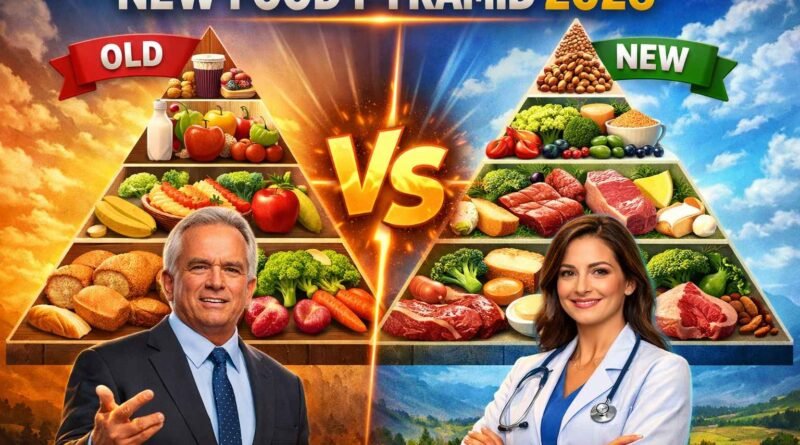
New Food Pyramid (2026): Deep Dive into the Future Nutrition
The new food pyramid has already emerged as a highly debatable issue on nutrition and health in 2025-2026. Under the leadership of the controversial U.S. Health Secretary Robert F. Kennedy Jr., the new dietary guidelines on Americans 2026 brings about a radical reinvention of how American people ought to eat – abandoning decades of traditional dietary guidance to a framework some authorities term as revolutionary, and others risky.
In this paper, we shall cover the reasons the new food pyramid 2025/2026 was created, what it suggests, why it is different than the previous food pyramid, and what it will do to your health, your family and the overall nutrition policy in the population.
Table of Contents
- What Is the New Food Pyramid?
- History of the Food Pyramid
- New Food Pyramid 2025/2026 Explained
- What Makes the New Food Pyramid Different
- Robert F. Kennedy Jr. and the New Dietary Guidelines
- Comparing Old Food Pyramid vs New
- New Dietary Guidelines for Americans (2026)
- Experts Weigh In: Support & Controversy
- How the New Food Pyramid Impacts Daily Eating
- How Families Should Use the New Pyramid
- FAQs about the New Food Pyramid 2026
- Conclusion
What Is the New Food Pyramid?
The most recent graphic model of national nutrition is the new food pyramid, which draws the image of the composition of our daily meals based on the types of foods that should occupy the highest part and where the proportion of food intake should be low. The new model, unlike the classical version with grains and carbohydrates on the bottom, inverts the food pyramid, with high-quality proteins, healthy fats, fruits, and vegetables on the forefront.
The Shift from Old Food Pyramid to New
Over the decades, food pyramid was a consistent depiction of balanced dieting. Nevertheless, there are increasing obesity, diabetes and chronic illness trends that are making policymakers reconsider these visual indicers. The new food pyramid 2025/2026 is radically different in its approach to the dietary prioritization and daily food balance.
Why Change Was Needed?
The old models of nutrition relied on decades old evidence that failed to take into consideration the current lifestyle, the prevalence of chronic diseases, the advancements in the metabolic science, and the realities of food production.
Critics claimed that the old food pyramid was the cause of excessive consumption of refined grains and sugars along with the lack of emphasis on the proteins and healthy fats.
History of the Food Pyramid
The development of food guidance in America would help us to comprehend the new dietary guidelines.
The Old Food Pyramid Explained
The original food pyramid introduced in the early 1990s put:
- The greatest foundation on bread, cereals, rice, and pasta.
- Adequate portions of vegetables and fruits more than moderate.
- Minor amounts of dairy and proteins.
- Fats and sweets at the apex
In this arrangement, the use of carbohydrates in majority as the form of the daily calories intake was implicitly implied to be the case. Critics said over time that this diluted sugar and refined carbs in most products of the grain category.
Flaws in the Traditional Model
A number of weaknesses started to be revealed:
- Excessive focus on the consumption of grain.
- Hypoproteomics of protein diversity.
- Lack of difference between processed and unprocessed carbohydrates.
These problems created misunderstanding and resulted in nutrition confusion of the people.
Transition to MyPlate and Other Visual Guides
In retaliation, the U.S government later substituted the pyramid with MyPlate, which is based on equal portions with no prioritization. Although it is more intuitive than a pyramid, MyPlate still did not include nutrient prioritization, which opened the prospect of the new food pyramid 2026 restructuring.
New Food Pyramid 2026 Explained
The Inverted Structure
Under the new dietary guidelines of the Americans 2026, the new food pyramid that is introduced includes:
- Protein & healthy fats (top)
- Vegetables and fruits
- Whole grains
- Reduced sugars, processed carbohydrates and refined foods.
It is a visual indication of significance by this inversion against the old pyramid: the most nutrient-rich food categories have become the backbone of the daily meal.
New Dietary Guidelines Core Principles
The revised recommendations are:
- Prioritizing whole foods
- Eating protein at every meal
- Eliminating added sugar
- Minimizing ultra-processed foods
This is the greatest federal change in nutrition policy in years.
Protein: The New Priority
According to the new food pyramid 2026, adults are supposed to take 1.2-1.6 grams of protein in relation to body weight in every daily diet, which is considerable high when compared to older guidelines.
What Makes the New Food Pyramid Different?
Red Meat and Full-Fat Dairy Emphasis
Another move that has earned a lot of criticism is the promotion of red meat and full-fat dairy as a healthy dietary choice – a move that has fallen against decades of advice that discouraged the consumption of both because of saturated fat issues. New guidelines imply that protein and healthy fats had been discouraged earlier in an incorrect manner.
Healthy Fats & End of War on Saturated Fat
The new pyramid brings in the inclusion of butter, beef tallow and full fat dairy as acceptable fats, redefining the perception of fats in human health.
Ultra-Processed Foods: War on Sugar and Additives
The new dietary guidelines are at war with added sugar and ultra-processed foods which are major causes of diabetics and obesity. The consumption of such foods is discouraged.
Fruits, Veggies & Whole Grains Role
The structure puts the protein and fats at the top but the fruits, vegetables and whole grains are essential. The new model heavily emphasizes the consumption of high amounts of fiber-rich whole grains and high amounts of produce (as opposed to the old pyramid, which unintentionally promoted refined carbs).
Robert F. Kennedy Jr. and the New Dietary Guidelines
RFK Jr’s Role in Redesigning the Food Pyramid
With his Make America Healthy Again agenda, the new food pyramid was introduced as U.S. Health Secretary Robert F. Kennedy Jr. headed the revamp of the dietary guidelines of the Americans 2026.
Criticisms & Support
As the proponents rally around the change to whole food, opponents claim that the focus on saturated fats and red meat runs against decades of nutrition research. Such agencies as the American Heart Association encourage caution.
Brooke Rollins & Policy Implementation
The secretary of agriculture Brooke Rollins was also influential in the championing of new guidance- especially in schools meals and federal nutrition programs.
Comparing Old Food Pyramid vs New
Visual & Structural Differences
The old food pyramid had carbohydrates at the base of the pyramid; however, the new food pyramid has proteins and healthy fats at the bottom, which means the priorities are inverted.
Dietary Recommendations Differences
Under the old food pyramid:
- Grains were foundational
- Fat was limited
- Sugar and fats were quite low
Conversely, new dietary guidelines 2026 focus on:
- Protein every meal
- Healthy fats
- Not processed foods but real ones
Long-Term Effects on Public Health
It will be only longitudinal studies that will reveal the true health impact, but the initial estimates suggest that this paradigm will shift the focus to the metabolic health and off-processed carbohydrates.
New Dietary Guidelines for Americans (2026)
Meat, Dairy, and Fats
Full fat dairy and meat are now healthier as long as you eat it sparingly with the support of higher protein intake and vital nutrients.
Refined Carbs, Sugar and Sodium
Refined sugars are not recommended and high sodium and additive contents of ultra-processed foods are directly marked as unhealthy.
Protein Targets & Daily Macronutrients
The new recommendations suggest that one should consume 1.2 to 1.6 grams of protein per kilogram of body weight in a day- much more than what the federal had advised.
Experts Weigh In: Support & Controversy
The nutritionists are split with some arguing that the new pyramid is relevant to the modern issues of nutrition and also others argue that the guidelines on saturated fats can increase cardiovascular risk.
How the New Food Pyramid Impacts Daily Eating?
Practically, now meals are to be devoted to:
- Lean proteins and meats
- Whole vegetables and fruits
- Dairy products and olive oil are healthy fats.
- Reduced sugar and little processed food.
How Families Should Use the New Pyramid
The new pyramid can be used by parents to come up with balanced meals with an emphasis on nutrient-dense foods instead of snacks with sugar and packaged food.
FAQs about the New Food Pyramid 2026
Q1: What changed most from the old food pyramid?
A1: The updated one gives more emphasis on protein and healthy fats instead of grains and refined carbohydrates.
Q2: Is sugar completely banned?
A2: Strong discouragement towards added sugars.
Q3: Are red meat and dairy healthy now?
A3: Yes– moderately, as required in the recent instructions.
Conclusion
The food pyramid of 2026 is a radical change in the nutrition policy of the U.S. Proposed by Robert F. Kennedy Jr. and approved by the updated dietary guidelines of the American population, it questions all the established dogmas regarding nutrition and establishes another definition of what a healthy diet is.
Trends and controversies may persist, especially regarding the focus on saturated fats and the need to focus on protein intake, but the main point is the same: to have a healthier future, people should choose real and minimally processed food.

Madison Kate is a content writer and digital journalist based in the United States, specializing in global politics, technology, finance, and trending world news. She is the lead writer at The World Point, where she has published extensively on international affairs, emerging technologies, economic trends, and current events.