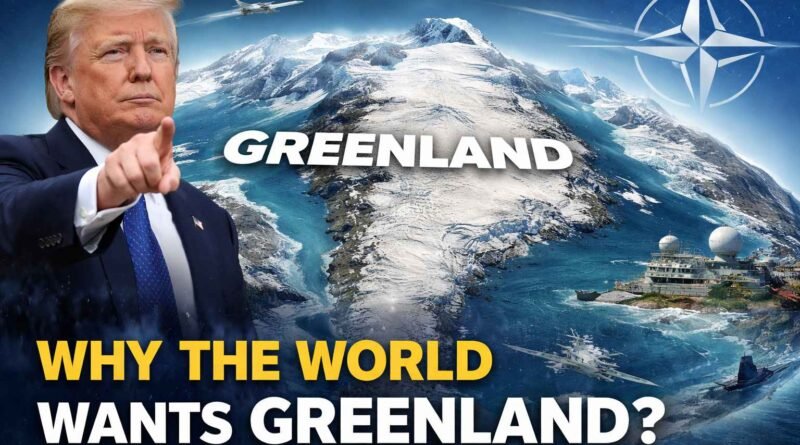
Greenland: Why The World Wants Greenland?
The largest Island in the world, Greenland, has gained more and more international interest. With its icy terrain, Arctic climate, and Inuit culture, Greenland has also become a geopolitical booster to the international and United States media, especially with the recent discussions of its strategic value and the United States interest. This paper will discuss Greenland in detail, its geography, history, global politics, and reaction of the world.
Table of Contents
- Geography and Climate
- The People and Culture of Greenland
- A Brief History of Greenland
- Why Greenland Matters Strategically
- Greenland in the Context of NATO
- Trump and Greenland: What’s Driving the Interest?
- Stephen Miller’s Role
- Greenland’s Mineral and Economic Potential
- Climate Change and Greenland’s Future
- International Law and Danish Sovereignty
- Reactions from NATO Allies
- Atlantic Council and Expert Analysis
- The Pituffik Space Base
- Possible Scenarios and Risks
- Greenland in World News
- US News: Domestic Politics and Foreign Policy
- Conclusions
Geography and Climate
Greenland is a huge island in the north which is located between the Arctic and Atlantic oceans. It is highly icy as it has about 80 percent of its surface covered by an enormous ice sheet which makes it one of the least densely populated regions on the earth. Its strategic position cuts across critical routes of the North Atlantic sea and GIUK Gap which is of utmost significance to military and surveillance missions because of its closeness to Russia and trans-Atlantic shipping routes.
The climate of Greenland is harsh, but the climate change is being experienced with more warmth than the global average. The melting ice is opening up new shipping routes and uncovering mineral deposits that were unreachable before, which is causing an economic and geopolitical drive and a source of geopolitical competition.
The People and Culture of Greenland
Greenland, despite its great size, which is larger than most European states, has only an insignificant population, about 56,000 people, most of whom are Inuit. The residents preserve the centuries old traditions associated with hunting, fishing and life on the Arctic. Their culture has been deeply connected with the environment, which makes climate change and political autonomy significant issues to the people.
Greenland maintains a unique cultural identity despite the fact that it is a constituent of the Kingdom of Denmark, in which it has substantial independence in its domestic matters. The foreign-policy decisions are still bound to Denmark and this has created complex political interests as the world powers pay attention to the island.
A Brief History of Greenland
The Greenland history dates back to several thousand years. The arrival of the Norse settlers occurred in the 10 th century, and the Inuit lived in the area centuries before the Europeans arrived. Greenland was a Danish colony later on in more recent times, and in 1953 it became a part of the Kingdom of Denmark. Later developments in self-government came to a peak in 1979, and in 2009, with a progressively enhanced autonomy. Today, the majority of domestic affairs are under the control of Greenland, with the defence and foreign policy being under the control of Denmark.
Why Greenland Matters Strategically?
The strategic significance of Greenland is primarily based on the value as such. Greenland is strategically located between North America and Europe, and the NATO defence planning, intelligence gathering, and monitoring of the foreign navy and air movements cannot do without it. The Arctic is an area where Western states have seen rivalry rising and rivalry over time due to the interest of the Russian and Chinese states which are both seeking to expand their presence and influence.
To the United States, Greenland offers missile defence, space surveillance and early-warning systems capabilities, which are already supported by the already established American installations in the island.
Greenland in the Context of NATO
Technically, Greenland is a member of NATO by the affixation of Denmark. Its geographical location increases the capability of the alliance in projecting power and surveillance of strategic sea routes. However, the latest political comments suggesting that the United States could possibly seek to take over Greenland-or question the validity of the Danish sovereignty have elicited debates on the unification of NATO.
The governments of the allies have stressed that any change in the status of Greenland should respect sovereignty, territorial integrity, and international norms which are the basis of NATO cooperation.
Trump and Greenland: What’s Driving the Interest?
Reemerging interest by the former President Donald Trump in Greenland acquisition has sparked controversy in the United States media. This issue has recently been rediscovered in the light of recent interviews and policy deliberations, with Trump claiming that the United States needs Greenland due to reasons of national security, and to withstand Russian and Chinese dominance in the Arctic.
Greenland has a strategic value to the Trump administration because of a number of reasons:
- Defense and Security: Arctic vendor would help improve American military coverage and early-warning systems.
- Natural Resources: The mineral resources produced by Greenland such as rare earth elements are important in electronics, defence technologies, and clean energy technology.
- Geo-political Competition: with more activities taking place in the Arctic, the U.S. would have strategic leverage by controlling Greenland.
However, there has been outcry even among the locals and the international community that such a move is not only unethical but also illegal and impractical.
Stephen Miller’s Role
Another figure that has become central to the conversation on the topic of Greenland is Stephen Miller, a senior adviser and a former deputy chief of staff at the White House. Miller has proposed that Greenland is supposed to be included in the United States to gain the Arctic region and support NATO interests without any concern of military objections of the other states.
His statements have elicited strong opposition amongst the leaders of the European nations, and they restate that Greenland is theirs and that any move to decide on its future must go through the due diplomatic and legal procedures. It has increased controversies of alliance relations, national sovereignty and international law.
Greenland’s Mineral and Economic Potential
Among the strongest motives to increase the level of global attention to Greenland, there is its mineral riches. Under the ice, there are geological surveys which show that there are large deposits of rare-earth minerals which are essential to electronics, renewable-energy technologies and defence industries.
With the melting ice accelerating, some of these resources have become more accessible hence attracting investors, governments, and corporations. The process of extracting in such a hostile environment is very economically and environmentally challenging but the windfall is very high.
Climate Change and Greenland’s Future
Greenland is drastically being changed by climate change. With temperatures rising higher than the global average, the ice sheet is melting away fast changing the ecosystems and infrastructures. This effect opens up possibilities of novel waterways like the Transpolar Sea Route that can reorganize the global shipping and commerce pattern.
The melting ice, however, is also a threat to the livelihoods of the local people, wildlife, and the level of the global sea, placing Greenland in the centre of the climate-policy and international environmental surveillance.
International Law and Danish Sovereignty
Greenland is a self-governing entity and a constituent part of Denmark under the international law. Any effort to change this position, be it by diplomatic conquest or more forcible methods, presents a great legal and moral issue.
Leaders of Europe and other parts of the world have always maintained that the future of the Greenland should be decided by its inhabitants with reference to the Charter of the United Nations thus adhering to the sovereignty and territorial integrity.
Reactions from NATO Allies
NATO member states have strongly championed the sovereignty and independence of Greenland, as well as the sovereignty of Denmark. France, Germany, the United Kingdom, and other countries in the allied nations have emphasized the necessity of collaborating and adhering to international standards.
They confirm once again that despite the strategic importance of the Arctic region to collective defence, any change in status of green land has to be the result of agreement and decision not unilateral actions.
Atlantic Council and Expert Analysis
The experts like the Atlantic Council have analysed the consequences of the increased geopolitical rivalry in the Arctic. Analysts argue that collective effort by NATO allies is more effective in handling the issue of security without losing alliances. The study by the Atlantic Council highlights that military intervention is not necessary when diplomatic collaboration and the already existing defence pacts provide strong platform.
Professionals also warn that the value of Greenland can be overestimated because of the excessive focus on the value of Greenland, and the advantages of this kind of direction can be underestimated, as well as the diplomatic, environmental, and socio-economic nuances of the issue.
The Pituffik Space Base
One United States military installation in Greenland is the Pituffik Space Base (formerly Thule Air Base) which is run by the U.S. Space Force. It is also a key to satellite tracking, missile-warning systems, and space defence activities, which are vital to the national security.
It has been shown to exist as a sign of the long-term military collaboration between the United States and Denmark, as well as the significance of Greenland to the global monitoring systems.
Possible Scenarios and Risks
There are a number of possible future situations involving the role of Greenland in geopolitics:
- Diplomatic Treaties: The development of defense and economic ties between Greenland, and Denmark, with other potential partners.
- Domestic Development: green infrastructure, mining and climate resilience Investment in Greenland infrastructure, mining, and climate resilience.
- Persistence of Tension: There is still tension and wrangling on the strategic control particularly among allies of NATO.
Analysts caution that aggressive measures might cost them a lot of trust, cause alliances to falter, and leave the international law in shambles-costs which definitely exceed the possible benefits.
Greenland in World News
Greenland has become the topic of repeated coverage by the world news, especially in relation to the larger U.S. foreign-policy agendas. Continuous reporting is done to understand the intersection of the Arctic geopolitics with Russia, China, and western alliances- as of changes in global power dynamics.
As an example, European analysts have noted that pursuing a tough policy toward Greenland would be an indication of a larger trend of aggressive foreign policy, whose future implications would not be limited to the Arctic.
US News: Domestic Politics and Foreign Policy
The strategic value of Greenland in the United States news has been a point of discussion in the context of the national defence, security of resources, and presidential leadership. Some legislators support the idea of diplomatic involvement and investment, whereas others assert that any idea of annexation is disastrous in terms of international relations and international treaties of long-term alliances.
There is still a divided opinion among the people with a great number of Americans appreciating the significance of Greenland as a defence strategic location but the idea of buying or forcefully obtaining territory does not sit well.
Conclusions
Greenland is much more than a frozen Arctic Island, it has become a nexus in the global strategic thinking, NATO defence stance and international relations. As the attention of the United States and the future of Greenland is being contested, the island is in a nexus between the aspect of geopolitical rivalry, global warming, and the conservation of culture.
Greenland will never cease its evolution in the world stage, whether in cooperation or contention, the world will continue to receive Greenland in the news on its world with the United States as well as in the strategies it plans to keep advancing in the coming years.

Madison Kate is a content writer and digital journalist based in the United States, specializing in global politics, technology, finance, and trending world news. She is the lead writer at The World Point, where she has published extensively on international affairs, emerging technologies, economic trends, and current events.