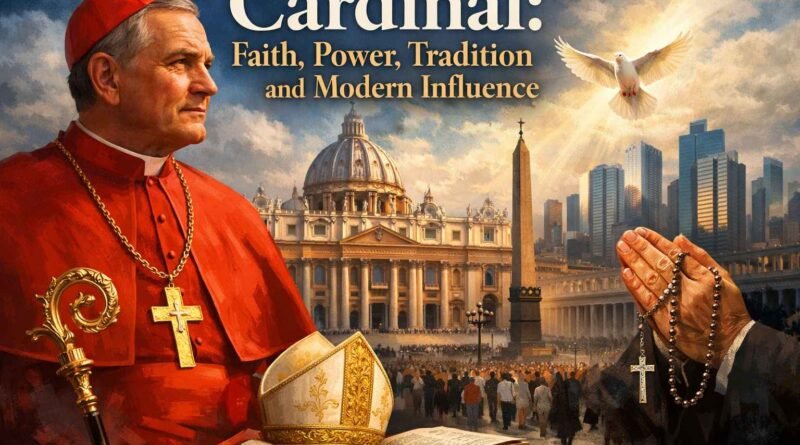
Cardinal: Faith, Power, Tradition and Modern Influence
The usage of the word cardinal has recently attracted attention to the whole world, being observed in search engines, news, and social media. This outburst of the interest is not related to one event but is associated with various processes taking place concurrently in the fields of religion, politics and sport.
The role of the cardinal has been squarely on the limelight with a series of meetings, reforms and discussions within the Catholic Church that involve senior clergy. Simultaneously, the coverage of the Arizona Cardinals, one of the biggest NFL teams has given the word a wider exposure outside the religious world. A combination of these trends has rendered the term cardinal a keyword connecting faith, power and popular culture.
The Meaning of the Word Cardinal
The word cardinal was named so because of the Latin word cardinalis which translates to principal or essential. In the past, it defined something that was of primary significance. A cardinal in the Catholic Church is an important church leader who is appointed by the Pope and endowed with a lot of responsibilities.
Outside religion, the term cardinal can also have a linguistic meaning as an indicator of importance, such as cardinal numbers, or cardinal rules. This multi-layered meaning adds to the versatility and the broad applicability of the word in the contemporary discourse.
Origins of the Cardinal in the Catholic Church
The cardinal office evolved over time in the first centuries of the Christian world. During the early period, cardinals were distinguished priests who were based in the largest churches in Rome. In the course of time, their power increased because the Church became more organised and centralised.
By the Middle Ages cardinals had become influential advisors of the Pope, influencing doctrine, administration and diplomacy. This is the historical development that can make the cardinal one of the most influential personalities in Catholicism today.
The Role and Responsibilities of a Cardinal
The main responsibility of a cardinal is to help the Pope in ruling the Catholic Church in the whole world. A significant number of the cardinals are the heads of large dioceses or employees of Vatican offices. They are mandated with the roles of supervising theological issues, church institutions, and also representing the Vatican internationally.
The Cardinals are also supposed to lead in morality and have respect to church doctrines. This fusion of spiritual dominion and the administration makes the cardinal central to the administration of Catholic government.
Cardinal Vestments and Symbolism
The red vestment, which is a characteristic of a cardinal, is one of the most recognisable features. The colour is an indication of readiness to spill blood in the name of the religion, which is devotion and sacrifice.
The red biretta and cassock automatically recognize a cardinal in the ceremonies and appearances in the streets. Such visual symbolism gives more weight to the role and justifies why the pictures of cardinals usually resonate well with the masses more so during key church occasions.
Cardinals and the Papal Conclave
The most famous role of a cardinal is, probably, the part in the papal conclave. In case of the death of a Pope or his resignation, the cardinals who are qualified meet in Vatican City to select another Pope. This is a very ritualistic and secretive process that draws great attention all over the world. The cardinal electors are the individuals who determine the future of the Catholic Church and therefore they have a central role during a conclave that is also one of the most far-reaching in the religious life of the world.
Cardinal Power and Influence in Vatican Politics
In addition to spiritual leadership, cardinals are also important in Vatican politics. They affect policy making, interpretation of doctrines and reforms in administration. There are some progressive views in some cardinals and some cardinals practice traditional positions.
These occurrences within the organization tend to be revealed through synods and meetings adding to the media attention. The equality of the different cardinals may decide the reaction of the Church to the current challenges like secularisation, social justice, and change of technology.
Recent Vatican Meetings and Global Attention
Vatican cardinals meetings that have been held in the last few months have attracted a lot of attention. The reform and transparency of the church and the outreach to the world have been discussed, and have been a controversial issue both within and outside religious circles.
The public interest in what cardinals do and how their actions impact on millions of believers across the world has been provoked by media coverage of these gatherings. This increased popularity has directly led to the cardinal trending in the search sites.
Cardinals and Modern Church Reforms
Free-thinking modern cardinals are tasked with a challenging role of leading an institution that is ancient, in a fast-evolving world. The problems of clerical responsibility, inclusion, and interfaith dialogue involve the need to be carefully led.
There are those cardinals who support reform to make the Church more accessible and there are also those who emphasize on the need to preserve tradition. This conflict echoes the debates of the wider society and keeps the cardinals at the centre of the discussion of religion and morality.
Controversies and Challenges Facing Cardinals
Every strong organization has its share of controversies and cardinals have not been spared. The image of cardinalate has occasionally been tainted by allegations of misconduct, administrative inefficiencies and internal disagreements. There must be transparency and accountability in order to deal with these challenges. The digital era has increased the public scrutiny of the actions of the cardinals so that it has become more transparent and of more consequence than ever.
Cardinals in Global Media and Public Perception
The media presentation is a major factor that makes people judge cardinals. They are usually presented in films, documentaries, and news items as powerful personalities who have to operate in complicated moral environments. Whereas there are those depictions that underline authority and tradition, others dwell on human vulnerability and reform activities. Such variety of representation leads to continuous appeal to the role of the cardinal in contemporary society.
The Arizona Cardinals and Global Sports Interest
Beyond the religious connotation, the word cardinal has been given new focus with the Arizona Cardinals, which is a professional football team based in the United States. Arizona Cardinals are competitors in the National football league and they have a following and worldwide fame. Performances in the recent past, management choices and even the movements of the players have put the team in the news where the keyword cardinal has spread its tentacle to the sporting world.
Why the Arizona Cardinals Are Trending Now?
Arizona Cardinals are currently in the limelight because of a number of on-field factors as well as an organizational shift. Coaching tactics, draft choices and standout performances by players have drawn the debate amongst both analysts and fans. Foreign fans who watch NFL have also helped to increase online queries. This sporting environment, albeit quite unrelated to the religious issues, makes the word cardinal more visible in general in the world media.
Cultural Contrast: Religion and Professional Sport
The coincidental existence of Catholic cardinals and Arizona Cardinals makes it clear that there is a markedly different culture. One of them is centuries old religious tradition, and the other one is the modern entertainment and sports. Both organizations stand in opposition, yet they both have their fans, zeal, and global following. This common feature of the word cardinal explains why the word cardinal has been echoing across all kinds of audiences and settings.
The Word Cardinal in Language and Culture
Other than its religious and sporting associations the word cardinal is used in everyday language and culture. Geography is determined by cardinal directions, and ideal morality is determined by cardinal virtues. This vast application supports the impression of significance and centrality. The richness of the word in terms of culture helps to make it ever-relevant and makes the discussion of the most cardinal issues versatile and involving.
Public Curiosity and Search Trends Explained
Trends in search indicate that people are becoming more curious about the definition, history and purpose of cardinals. It is the curiosity about news cycles, discussions on social media, and global events. When the news of the religious matters and headlines of sports meet, people are more interested. The knowledge of such trends helps to understand information and why some words are being given attention by the crowd.
Digital Media, News Cycles and the Cardinal Topic
The digital media enhances faster spread of information hence the story of what is happening in the cardinals can reach all nations of the world immediately. Vatican events, sports highlights and web based commentaries are live-streamed to keep the environment in constant motion. This continuous stream of material makes the term cardinal keep the search engines and popular discussion alive, which strengthens its trending.
Future of the Cardinal in Church and Society
In the future, the cardinal role may continue to change. The Church will still be on the path of reform, tradition and global diversity. The word cardinal will be represented in the society in the form of language, culture, and sport. This flexibility makes sure that the idea will be applicable in the constantly evolving world.
How the Cardinal Concept Shapes Global Dialogue?
The ideology of the cardinal affects the international discourse by connecting concepts of power, leadership, and significance. It can be faith, ethics, or sport, but the word makes one think about what is the most important and the most vital. This understanding creates cross-cultural and cross-ideological communication.
Conclusion: The Enduring Power of the Cardinal
The long term strength of the cardinal is the capacity to bring together what appears to be a mixture of two worlds. In the Vatican and NFL stadiums, the word denotes power, culture, and dominance. With the current church proceedings and sporting activities still in progress, the interest in the cardinal will not decline. Such a distinct collision of faith, culture and competition can guarantee the cardinal will remain a potent influence and source of conversation and attention, and be a central figure in the global consciousness.
Frequently Asked Questions (FAQs)
1. What is a Cardinal in the Catholic Church?
A cardinal is a high ranking official in the catholic church that is appointed by the Pope. The Cardinals are close advisors of the Pope and they are usually in charge of big dioceses or major departments of the Vatican.
They contribute significantly to the formulation of doctrine, act as the voice of the Church in the international arena and take part in important decisions like a new Pope during a papal conclave. The cardinals are religious leaders who have been consecrated to lead the people, and they are all easily identified by the red vestments, which symbolise commitment to the faith and service.
2. Why are Cardinals in the Catholic Church trending in global news right now?
The cardinals have now become the trend as some of the high-level deliberations regarding the direction of the Church in the future are underway in the recent meetings and summits at Vatican.
As an illustration, at the beginning of 2026 the newly elected Pope Leo called upon cardinals on the world to strive to make the Church more inclusive – indicative of the constant reform measures and the general concern of the world about the way the Catholic Church is addressing the needs of contemporary society.
3. What was discussed at the latest Cardinal summit in the Vatican?
In the most recent cardinal summit, Pope Leo emphasized on unity, inclusivity and sustaining reforms in the Church. The major themes were pastoral outreach, improving the global message of love by Church, and progressive actions initiated by Pope Francis that should be continued. The media reported both the discussion of doctrines and strategic priorities of a Church.
4. How do cardinals communicate with the public today?
Most cardinals currently utilize social media sites like X (which was previously known as Twitter) to provide information about life in the Church, commentary on papal events, and background information about events like the papal conclave. Posts made by cardinals that have become trends have served to demystify church processes and increase the worldwide reach to Catholic audiences.
5. What is the papal conclave and how are cardinals involved?
A papal conclave is the term through which the College of Cardinals meets at Vatican City and comes up with a new Pope. Only persons below the age of 80 can vote as cardinals. It is a mysterious and ancient process that takes place when a Pope dies or quits his position and one of the most visible tasks that cardinals conduct.