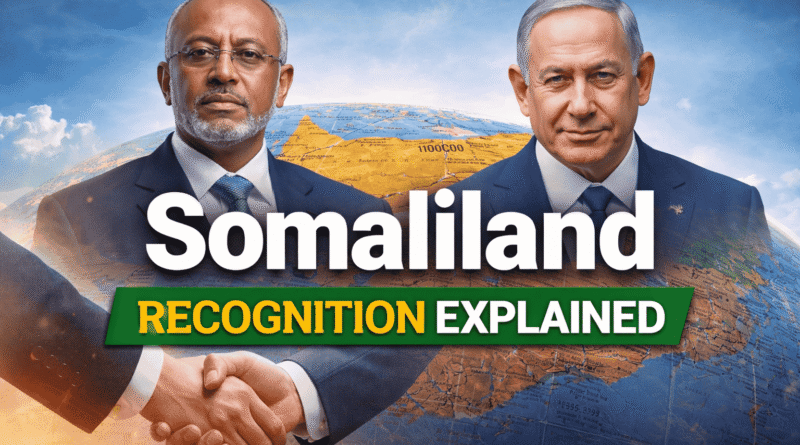
Somaliland Explained: The Untold Story Behind Recognition
Somaliland is an independent state that declared itself within the Horn of Africa which seceded in 1991, a year after the central Somali government collapsed. Although it possesses its own government, currency, military, and functional state institutions, the international position of Somaliland was not resolved during decades, and the international United Nations member states have not officially recognized it so far, until a radiant turn of events in December 2025.
In 2025, Israel became the first UN member state to officially recognize Somaliland as an independent and sovereign state, and doing so goes against the long-standing diplomatic policy of non-recognition. This historic has given rise to the intense debate on sovereignty, stability in the region and geopolitics strategy across the globe.
Table of Contents
- Introduction: What Is Somaliland?
- History of Somaliland: From Protectorate to Self-Declaration
- Somaliland Map: Territory, Geography, and Neighboring Regions
- Somalia and Somaliland: The Separation Explained
- The Long Quest for Somaliland Recognition
- How Many Countries Recognize Somaliland?
- Israel-Somaliland Recognition Breakthrough
- Somaliland Israel Relations: Why It Matters
- Why Did Israel Recognize Somaliland? Key Motivations
- International Reaction to Somaliland Recognition by Israel
- Strategic Importance of Somaliland in Global Politics
- Economic and Security Implications for Somaliland
- Challenges and Future of Somaliland’s International Status
- Frequently Asked Questions
- Conclusion: Somaliland in the World Today
History of Somaliland: From Protectorate to Self-Declaration
The present day Somaliland can be traced to colonial period:
- The British Somaliland Protectorate was created in the late 19 th century by Britain.
- British Somaliland was momentarily independent as a brief State called State of Somaliland on 26 June 1960.
- On 1 July 1960, Somaliland voluntarily became part of Italian Somaliland to become the Somali Republic.
- Southern Somalia had decades of dictatorship under Siad Barre followed by civil war that saw the region declare independence in May 1991 as the Republic of Somaliland.
The governance and democratic elections in Somaliland have been (comparatively) peaceful since 1991, in contrast to the chaos that has been common in southern Somalia. This stability notwithstanding, it has not been able to secure formal international recognition until 2025.
Somaliland Map: Territory, Geography, and Neighboring Regions
A map of a typical Somaliland will depict:
- A region located on the coast of the gulf of Aden in the horn of Africa.
- West borders with Ethiopia and Northwest borders with Djibouti.
- On the east and south side is Somalia who has Somaliland as a federal member state.
Geopolitically, the region is strategically located due to its strategic positioning close to the main shipping lanes in the Red Sea. The Arabian Sea is joined to Suez Canal (one of the most crucial maritime routes of the world) by the Gulf of Aden that located beside the peninsula.
Somalia and Somaliland: The Separation Explained
Despite the fact that Somaliland made its independence declaration in 1991, the federal government of Somalia does not acknowledge this separatism in Somalia, claiming that Somaliland is still a member of the Somali national territory in the light of the international law. The issue of Somali solidarity and Somaliland sovereignty is the core of regional politics.
Somalia regards the union of 1960 as binding and still makes diplomatic attempts to reclaim the territory. This puts the Somaliland in a peculiar position: the Somaliland self-governs effectively, but is still largely considered by the international law as a breakaway region, which has debatable statehood.
The Long Quest for Somaliland Recognition
Somaliland recognition was one of the basic diplomatic pursuits of the Somaliland leaders over the last thirty years. Without recognition:
- It was not able to become a member of the United Nations or African Union.
- It was not a member to formal world economic institutions such as the World Bank and IMF.
- It was hindered to draw foreign investment and international treaties.
Although Somaliland had informal relations with certain countries, and had liaison offices in other countries, it did not receive the recognition of any UN member state as a state until 26 December 2025.
How Many Countries Recognize Somaliland?
Someday only one UN member state recognizes Somaliland: Israel.
This historical awareness occurred in the month of December 2025 when Israel declared that Somaliland was a sovereign, independent state.
This was the first country to grant complete diplomatic recognition since 1991. The leaders of Somaliland have long been lobbying the international community to acknowledge their status, yet the politics and international conventions regarding state borders and non-interference made no state take any action – until the statement by Israel in 2025.
Israel-Somaliland Recognition Breakthrough (Dec 2025)
On 26 December 2025 the state of Israel officially recognised the Republic of Somaliland as an independent country- the first UN member state to do so. The declaration said that Israel recognizes Somaliland as an independent state and seeks to have full diplomatic relations with it, consisting of ambassadors and embassies.
This step is a historic milestone to Somaliland and more than three decades of diplomatic isolation has been broken and there is a possibility of receiving broader international attention.
It is noteworthy that the move was launched in the spirit of the Abraham Accords, which connects the move with a larger structure of recent diplomatic normalization agreements between Israel and various Muslim-majority states.
Somaliland Israel Relations: Why It Matters?
Such recognition caused a heated international response:
Somaliland’s Reaction
The President of Somaliland, Abdirahman Mohamed Abdullahi, called the recognition historic and said that it was prepared to develop strategic cooperation and join systems such as the Abraham Accords.
Somalia’s Reaction
The Somali government criticized the recognition as against the law and territorial integrity of Somalia claiming that it was interfering with the internal affairs of the nation.
Regional and International Reaction
The move was condemned by multilateral bodies and most countries they include: African Union, Arab League and bodies such as the OIC (organization of Islamic Cooperation) and they reiterated that they supported the unity of Somalia and that such move could be dangerous precedents.
This scandal highlights the fact that Somaliland Israel relations are not isolated anymore but rather in the centre of discussions concerning the sovereignty, security in the region and international recognition rules.
Why Did Israel Recognize Somaliland? Key Motivations
Analysts give several strategic reasons why Israel recognized Somaliland:
Geostrategic Interests
Somaliland is close to the red sea and Gulf of Aden which are important sea paths. Recognizing Somaliland will provide Israel with a strategic presence in an area where Iran-supported Houthi group is active in Yemen.
Abraham Accords Expansion
The decision was made as the continuation of the Abraham Accords system that would increase diplomatic relations between Israel and other states and states, particularly those that would facilitate peace and economic engagement.
Diplomatic Innovation
Through recognizing Somaliland, Israel can be in a unique position as a diplomatic first-mover, which could bring it influence in the Horn of Africa- a part of the world of strategic interest in trade and security.
International Reaction to Somaliland Recognition by Israel
African Union
The AU also strongly opposed the recognition stating that it would expose the continents borders which are guarded under the basis of territorial integrity.
🇴🇲 Arab and Muslim-Majority Nations
The move was condemned by several Arab countries, such as Saudi Arabia, Egypt, Kuwait, Jordan, and Qatar, as being illegal with threats to the peace of the region being stated.
🇸🇴 Somalia
Somalia objected to the recognition and demanded that Somaliland was still on the Somali territory according to the international laws.
United Nations
The action triggered a crisis debate in the UN Security Council and points at the tension around the international standards of sovereignty and recognition.
Nevertheless, this was met by some resistance, and Somaliland rejoiced with the recognition as it would help to generate more international support.
Strategic Importance of Somaliland in Global Politics
The geographical position of Somaliland gives the country disproportionate geopolitical weight:
Shipping and Trade
Somaliland is located on the gulf of aden overlooking one of the busiest maritime routes in Asia, Africa and Europe.
Security and Influence
The U.S, the Chinese and European countries are major global powers that have shown interest in the region because there have been security challenges in the region which include piracy, terrorism and regional instability.
Foreign Partnerships
There are several informal interactions over the long period of time with countries such as Ethiopia, UAE, and other foreign interests taking a military or economic deal with Somaliland without recognition.
The acknowledgment of Israel may hasten the strategic adjustments in the Horn of Africa, which may have effects on global security and economy.
Economic and Security Implications for Somaliland
Formally recognized by Israel, Somaliland can win:
- Availability of expanded foreign investment.
- New trade and diplomatic relations.
- Possible security cooperation with allied countries and Israel.
- Recognition has the legal status in the bilateral treaties and trade agreements.
Nevertheless, financial restrictions remain there, because the financial institutions and large blocks of the world continue to perceive the territory in the context of Somalia. Complete acceptance by principal states (e.g. United States, European Union) is critical to extensive economic integration.
Challenges and Future of Somaliland’s International Status
Although such a breakthrough has happened, there are numerous challenges:
Contested Sovereignty
Somalia is categorically against the decision by Somaliland to become independent because according to the international laws, sovereignty promotes a territorial integrity, and not unilateral secession.
Continued Lack of Widespread Recognition
Although recognition to Israel is historic, majority of countries remain not to change their policy. International acceptance by major world powers such as the U.S., U.K and EU is yet to be established.
Regional Tensions
There are some regional organizations that caution the move would encourage other separatists in Africa even more likely disrupting the existing boundaries.
Domestic Development Needs
Internal economic and social development issues such as employment, infrastructure, and empowerment of the youths continue to be a challenge in Somaliland. Having these issues recognized is not a solution.
Frequently Asked Questions
Q1: Why is Somaliland not recognized by many countries?
A: Because of the fact that taking away the territorial integrity of Somalia and the international standards which prohibit the support of secession without the large-scale diplomatic consent.
Q2: How many countries recognize Somaliland?
A: As of December 20th, 2025, only Israel has recognized Somaliland as an independent sovereign state.
Q3: Why did Israel recognize Somaliland?
A: The presence of interests in strategic geopolitics, the growth of diplomatic relationships through such schemes as the Abraham Accords, and the stability and position of Somaliland were the major factors.
Q4: Is Somaliland part of Somalia?
A: Somalia is asserting that it is under its sovereign territory, but the Somaliland has been self-governing since 1991.
Q5: What does the Somaliland map look like?
A: Somaliland is found in the Northwestern part of the Somalia along the Gulf of Aden bordering Ethiopia and Djibouti.
Conclusion: Somaliland in the World Today
Somaliland is a fascinating and geopolitical hotspot of the unrecognized states of the world, until now. The December 2025 recognition by Israel is a historic break from years of stagnation in the diplomatic relations. Although the reaction of the international community is divided, its recognition may fuel more negotiations among the world actors regarding the future of Somaliland.
Somaliland is in a dilemma between de facto and international independence. Its future days might reinvent its position in the politics of the world, regional security and economic prospects, not only of Somaliland but of the Horn of Africa and beyond.

Madison Kate is a content writer and digital journalist based in the United States, specializing in global politics, technology, finance, and trending world news. She is the lead writer at The World Point, where she has published extensively on international affairs, emerging technologies, economic trends, and current events.