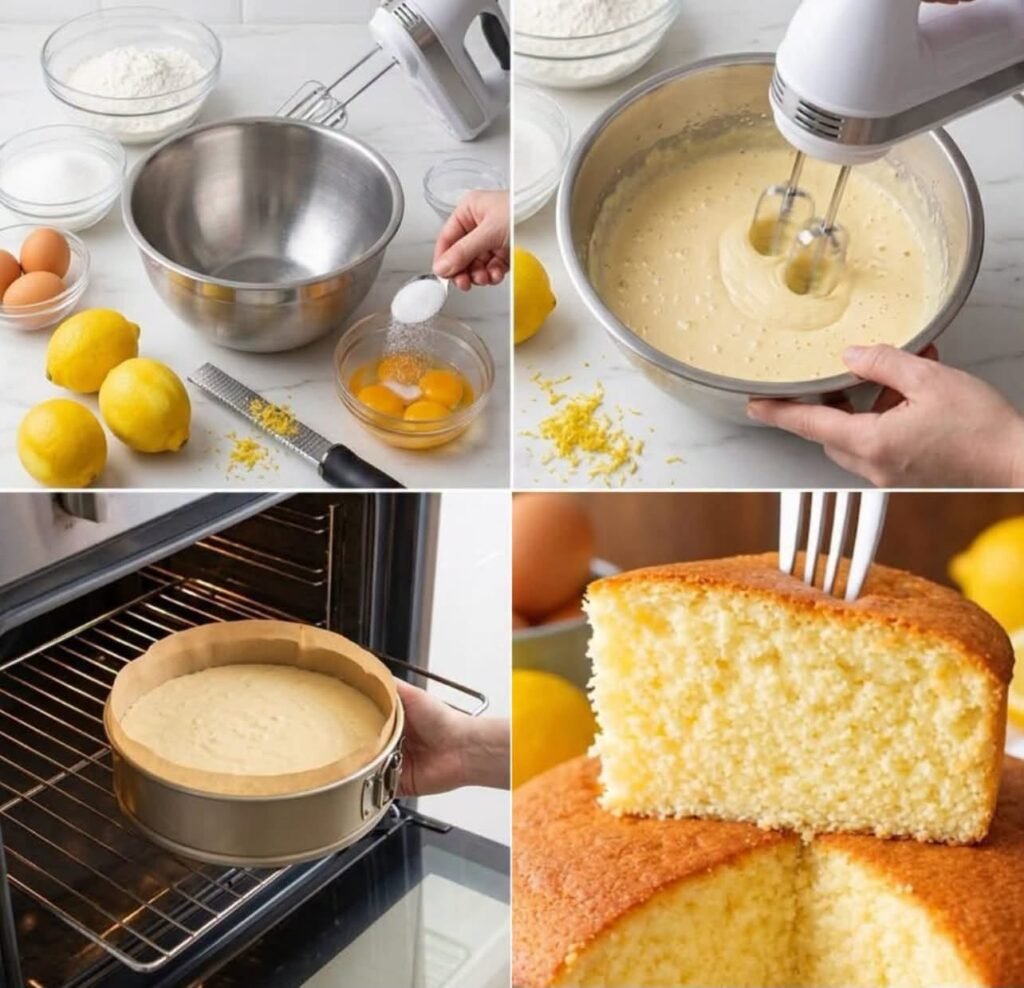
Lemon Sponge Cake
If you’re looking for a light, fluffy, and beautifully fragrant dessert, this Lemon Sponge Cake is a perfect choice. Made with fresh lemon juice and lemon zest, this homemade cake has a soft, airy crumb with just the right amount of bright citrus flavor.
It’s simple enough for an everyday dessert but elegant enough for birthdays, afternoon tea, holidays, or family gatherings. Serve it plain with a dusting of powdered sugar, or add a simple lemon glaze for an extra burst of sweetness and tang.
Why You’ll Love This Lemon Sponge Cake
This cake is all about texture. Properly whipped eggs help create a beautifully light sponge, while fresh lemon adds a refreshing citrus flavor without making the cake overly tart.
Here’s why this recipe is a keeper:
- Light and fluffy texture
- Fresh lemon flavor
- Easy homemade cake
- Simple pantry ingredients
- Perfect with tea or coffee
- Great for birthdays and celebrations
- Delicious with fresh berries
- Can be served plain or glazed
Ingredients You’ll Need
For the Lemon Sponge Cake
- 1½ cups all-purpose flour
- 1½ teaspoons baking powder
- ¼ teaspoon salt
- ½ cup unsalted butter, softened
- ¾ cup granulated sugar
- 3 large eggs, room temperature
- 2 tablespoons fresh lemon zest
- ¼ cup fresh lemon juice
- ½ teaspoon vanilla extract
- ½ cup whole milk
For the Lemon Glaze
- 1 cup powdered sugar
- 2–3 tablespoons fresh lemon juice
- 1 teaspoon lemon zest
Optional Garnishes
- Thin lemon slices
- Fresh berries
- Powdered sugar
- Whipped cream
- Fresh mint
How to Make Lemon Sponge Cake
Step 1: Prepare the Oven and Pan
Preheat your oven to 350°F (175°C).
Grease a 9-inch round cake pan with butter or nonstick spray.
Line the bottom with parchment paper.
Lightly flour the sides of the pan, then tap out any excess.
Preparing the pan properly makes it much easier to remove the delicate sponge after baking.
Step 2: Combine the Dry Ingredients
In a medium bowl, whisk together the flour, baking powder, and salt.
Set the mixture aside.
Whisking the dry ingredients first helps distribute the baking powder evenly throughout the flour.
This is especially important for a sponge cake because you want the cake to rise evenly.
Step 3: Cream the Butter and Sugar
In a large mixing bowl, beat the softened butter and sugar together for approximately 3–4 minutes.
The mixture should become pale, light, and fluffy.
This step incorporates air into the batter and helps create a tender cake.
Make sure your butter is softened but not melted.
Step 4: Add the Eggs
Add the eggs one at a time, beating well after each addition.
Add the lemon zest and vanilla extract.
Mix until everything is smooth and well combined.
If the mixture looks slightly curdled, don’t worry. It should come together once the dry ingredients are added.
Step 5: Add the Lemon and Dry Ingredients
Add about one-third of the flour mixture to the batter.
Mix gently.
Add half of the milk and lemon juice.
Continue alternating the flour mixture with the remaining milk and lemon juice.
Mix just until everything is combined.
Don’t overmix the batter.
Overmixing can develop too much gluten and make the sponge heavier instead of light and fluffy.
Step 6: Bake the Cake
Pour the batter into the prepared cake pan.
Smooth the top gently with a spatula.
Place the pan in the center of the preheated oven.
Bake for approximately 28–35 minutes, or until the top is golden and a toothpick inserted into the center comes out clean.
The cake should spring back gently when lightly pressed in the center.
Avoid opening the oven repeatedly during baking because sudden temperature changes can cause the cake to sink.
Step 7: Cool and Glaze
Remove the cake from the oven and let it cool in the pan for approximately 10 minutes.
Carefully run a knife around the edges.
Transfer the cake to a wire rack and allow it to cool completely.
While the cake cools, prepare the lemon glaze.
Whisk together the powdered sugar, lemon juice, and lemon zest until smooth.
Drizzle the glaze over the completely cooled cake.
Let the glaze set for a few minutes before slicing.
Tips for a Light and Fluffy Sponge Cake
Use Room-Temperature Ingredients
Room-temperature eggs, butter, and milk combine more easily and help create a smoother batter.
Cold ingredients can make the butter mixture less uniform.
Don’t Overmix
Once the flour goes into the batter, mix only until the ingredients are combined.
Overmixing can make the finished cake dense.
Measure Flour Correctly
Too much flour can make a sponge cake dry and heavy.
For the most accurate results, weigh your flour or gently spoon it into your measuring cup and level the top.
Use Fresh Lemons
Fresh lemon juice and zest provide much better flavor than bottled lemon juice.
The zest is particularly important because it contains concentrated citrus oils.
Don’t Overbake
Keep an eye on the cake toward the end of the baking time.
Once a toothpick comes out clean and the cake springs back lightly, remove it from the oven.
Overbaking can make the sponge dry.
How to Make the Lemon Flavor Stronger
If you love an intense lemon flavor, there are several easy ways to increase it.
Add extra lemon zest to the batter.
You can also brush the warm cake with a simple lemon syrup made from lemon juice and sugar.
For an even stronger finish, add a thicker layer of lemon glaze once the cake has completely cooled.
The combination of lemon zest, lemon juice, and glaze creates a bright citrus flavor without making the cake heavy.
Delicious Ways to Serve Lemon Sponge Cake
This cake is delicious on its own, but there are plenty of ways to dress it up.
Try serving it with:
- Fresh strawberries
- Blueberries
- Raspberries
- Whipped cream
- Vanilla ice cream
- Lemon curd
- Fresh mint
- Powdered sugar
For an elegant dessert, place a slice on a plate with a spoonful of whipped cream and a handful of fresh berries.
Easy Lemon Sponge Cake Variations
Lemon Berry Cake
Fold fresh blueberries or raspberries gently into the batter before baking.
Avoid adding too many berries because excess moisture can affect the cake’s texture.
Lemon Coconut Cake
Add ½ cup shredded coconut to the batter for a tropical twist.
You can also sprinkle toasted coconut over the lemon glaze.
Lemon Cream Cake
Slice the cooled cake horizontally and fill it with lightly sweetened whipped cream.
Add fresh berries between the layers for a beautiful dessert.
Lemon Poppy Seed Cake
Add 1–2 tablespoons of poppy seeds to the batter for a classic lemon-poppy-seed combination.
Lemon Blueberry Cake
Add fresh blueberries and finish the cake with lemon glaze.
The sweet berries and bright lemon flavor complement each other beautifully.
How to Store Lemon Sponge Cake
Store the cake in an airtight container at room temperature for up to 2 days if it is not filled with cream.
If you’ve added whipped cream, lemon curd, or another perishable filling, refrigerate the cake.
Refrigerated cake can generally be kept for approximately 3–4 days.
Allow chilled slices to sit at room temperature for a few minutes before serving for the best texture.
Can You Freeze Lemon Sponge Cake?
Yes.
For best results, freeze the cake without the glaze.
Wrap the completely cooled cake tightly in plastic wrap, followed by a layer of aluminum foil.
Place it in a freezer-safe bag or container.
Freeze for up to 2–3 months.
Thaw overnight in the refrigerator or at room temperature.
Add fresh lemon glaze after the cake has thawed.
Frequently Asked Questions
Why did my sponge cake become dense?
Overmixing the batter, using too much flour, or overbaking can all result in a dense cake. Mix gently once the flour is added and bake only until the center is set.
Can I use bottled lemon juice?
Fresh lemon juice is recommended because it has a brighter flavor, but bottled lemon juice can work if fresh lemons aren’t available.
Can I make this cake without the glaze?
Absolutely. The cake has plenty of lemon flavor on its own. A simple dusting of powdered sugar is also delicious.
Can I use a different cake pan?
Yes, but baking time will vary depending on the size and shape of the pan. A larger pan will generally produce a thinner cake and require less baking time.
How do I know when the cake is done?
Insert a toothpick into the center. If it comes out clean or with a few moist crumbs, the cake is ready. The top should also spring back gently when touched.
Final Thoughts
This Lemon Sponge Cake is a beautiful combination of light texture, buttery richness, and fresh citrus flavor. The soft sponge is delicious on its own, but the simple lemon glaze takes it to another level.
Whether you’re serving it for afternoon tea, a family dessert, a birthday, or a special gathering, this cake is easy to make and always feels homemade and special.
Pair it with fresh berries and whipped cream for an elegant dessert, or simply dust it with powdered sugar for a quick and classic finish.
Light, fluffy, buttery, and bursting with fresh lemon flavor—this Lemon Sponge Cake is sunshine in every slice!

Madison Kate is a content writer and digital journalist based in the United States, specializing in global politics, technology, finance, and trending world news. She is the lead writer at The World Point, where she has published extensively on international affairs, emerging technologies, economic trends, and current events.