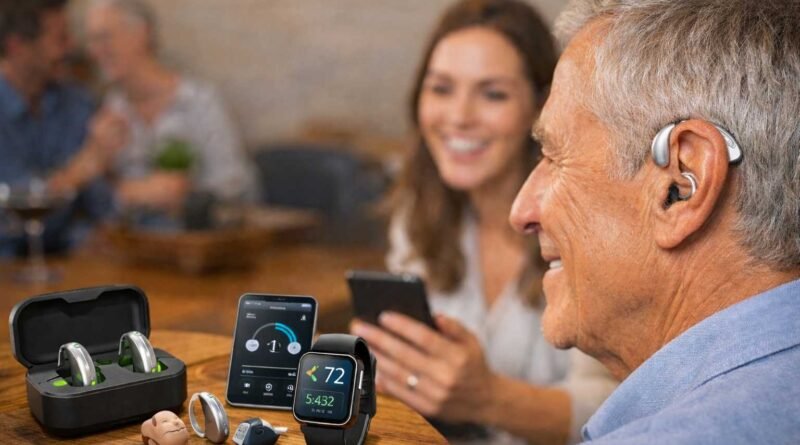
Hearing Aid Technology Improvements and Their Real Life Impact
Hearing aid technology refers to the electronic systems designed to improve hearing for individuals with hearing loss. Over the past few decades, this technology has evolved from bulky analog devices to sophisticated digital systems capable of adapting to multiple listening environments. Today hearing aids are not just a simple amplifier, but a smart, adaptive and interactive device that can improve the quality of life.
This makes hearing aid technology more significant than ever due to the ageing population of the world and the increased number of individuals looking to find a solution to the hearing impairment. Hearing aids are also changing the way people perceive sound with the introduction of features like sound damping, voice amplification, phone connectivity and health care monitoring.
History of Hearing Aid Technology
The history of hearing aids technology is centuries-old, although the major milestones started in the 20th century. The initial apparatus was cumbersome and mechanical such as ear trumpets where the sound was funnelled into the ear canal. These gadgets were not as useful as they did not make much to actually enhance hearing of people with moderate to severe hearing loss.
The 1920s saw the birth of electronic hearing aids that were a significant turning point. The technology of the vacuum tubes was able to amplify more but still had to solve the problems of size and battery life. During the 1950s, transistors were created which resulted in smaller and more efficient devices.
The 1990s saw the advent of digital technology, and this brought a new chapter in the history of technology in hearing aids. The digital hearing aids might be able to process sound in smarter ways, filter out the surrounding noise and also be tailored to the hearing profile of the user. This development has not stopped in the modern world with artificial intelligence (AI), machine learning, and wireless connection defining the next era of hearing aids.
How Modern Hearing Aids Work
It is important to first understand the concept of sound waves before understanding how modern hearing aids work. The sound is sent to the device in form of a microphone which changes them into digital signals. Internal chips process these signals and reinforce, filter, and optimize sound according to the needs of the user in regard to hearing.
Once processed, the enhanced sound is converted back into an analog signal and delivered to the ear through a speaker. The goal is to amplify speech and important sounds while minimizing background noise and distortion.
Modern devices also have the following;
- Directional microphones to enhance speech clarity in noisy areas.
- Whistling sounds to be eliminated by feedback cancellation.
- Automatic change of settings depending on environment.
- Bluetooth wireless audio streaming.
- Tracking of health and activity.
Key Components of Hearing Aid Technology
The most important thing that one must know to explore the full potential of hearing aids is its main components:
Microphones
The environment sounds are captured by microphones. Hearing aids that are available in the modern world usually contain several microphones to enhance the directional sound quality.
Amplifier and Digital Signal Processor
It is the ear of the hearing aid. It works with the signal of sound and boosts the sound according to how the user hears.
Speaker/Receiver
The name amplified and processed audio is passed to the ear through the speaker.
Battery
Batteries power the device. Such innovations as lithium-ion batteries that are rechargeable are an order of the day.
User Controls and Connectivity
The modern devices also have user controls through phone apps, which will enable smooth adjustments, streaming, and support remotely.
Hearing Aid Technology Advances Through the Years
Transition From Analog to Digital Systems
The most significant advancement in the technology of hearing aids was the change to the digital processing of hearing aids which began in the 1990s. Digital hearing aids enabled the auditory analysis to be more precise, differentiate the speech and the background noise, as well as customize the level of amplification according to the hearing profile of a person. This development enhanced the sound clarity, ease of use, and the overall precision of listening, which is the basis of the current hearing solutions.
Design Innovation and Wireless Connectivity
With the advancements in technology, miniaturization enabled hearing aids to be reduced in size, weight and much more discrete without performance being affected. Simultaneously, directional microphones were developed to improve the understanding of speech in a noisy environment through providing attention to sounds that are emitted in a certain direction. Wireless connectivity with Bluetooth integration, in turn, changed the experience of users as it allowed them to stream directly with their smartphones, televisions, and other digital devices.
Smart Features and Intelligent Adaptation
New technology of the hearing aids centers on convenience and intelligence. Rechargeable batteries have replaced disposable options, offering longer usage times and easier daily maintenance. Additionally, artificial intelligence and machine learning now allow hearing aids to automatically adapt to changing environments, learning user preferences and optimizing sound in real time. These advancements have turned hearing aids into basic amplifiers into the sophisticated and versatile daily gadgets.
Hearing Aid Technology 2026: Latest Trends
The technology of hearing aids is advanced better than ever as of 2026. The strongest tendencies that are hosting the industry are:
Artificial Intelligence Integration
AI allows hearing aids to understand the preferences of the user and adjust to change automatically.
Enhanced Connectivity
Direct integration to smart phones, smart home gadgets, and health applications.
Health Monitoring Features
It monitors activity, heart rates and even fall detection.
Improved Battery Life
Battery rechargeable batteries are long lasting and standard.
Direct Streaming
Users are able to stream music, calls and media to hearing aids in high quality sound.
Telehealth Support
Programmation and modifications via a distance connection with reliable hearing care professionals.
The developments are an indication of the direction of the future of hearing aid technology 2026; it is becoming more and more personalized, versatile and integrated with life.
Levels of Hearing Aid Technology Explained
Knowing the level of the hearing aid technology can assist one to make the appropriate selection of the device. In most cases, technology levels can be categorized as:
Basic
Applicable to those who have hearing conditions that are predictable. The applications of these models are on the basic amplification with minimal adaptive capabilities.
Mid-Level
Adds more noise management features and speech recognition in moderate levels.
Advanced
Provides better acoustics, flexible directionality, and greater comfort in noisy environments.
Premium
The highest-quality technology with the newest advancements, such as AI, excellent connectivity, automatic image recognition, and smooth compatibility with other devices.
The choice of the right level will be based on the lifestyle, listening requirements, and financial capabilities. Audiologists are able to give advice by using individual hearing profiles.
Hearing Aid Technology Improvements and Their Impact
Enhanced Sound Quality and Speech Understanding
The improvement in modern hearing aid technology has greatly boosted speech clarity even in the tough listening conditions. High tech digital sound processing reduces the background noise as the speech is given priority and talks are easier and more natural. Such advancements enable users to socialize more easily at school, at the work place and in the streets.
Comfort, Design, and Power Efficiency
Design and engineering advances have ensured that hearing aids are the most comfortable and discrete to wear than ever. Ergonomic smaller designs enable all-day wear without any form of discomfort and contemporary rechargeable batteries offer longer usage duration and removes the inconvenience caused by frequent replacement of the battery. Such improvements simplify the process of using hearing aids and make them attractive to use in everyday life.
Seamless Connectivity and Remote Care
The current hearing aids are fully compatible with the smart phones, televisions and other electronic gadgets and are useful in supporting the active and connected lifestyles. Wireless connectivity enables users to stream calls, music and media right into their hearing aids. Moreover, telehealth opportunities allow making adjustments remotely and conduct virtual consultations, which means that the frequency of personal communication is much less, and the quality of the provided assistance remains at the appropriate level. Such improvements not only improve hearing performance, but also improve the general quality of life.
Hearing Aid Technology Improvements and Their Impact
In the future, it is expected that hearing aid technology will keep on growing. Predictions include:
Biometric Health Tracking
Devices can track vital signs in a more thoroughly manner.
Augmented Hearing
Hearing aids with hi-tech sensors and AI will be able to focus on the sounds they want to hear, and the distraction will be blocked.
Brain-Interface Integration
Even better speech perception is being studied by researchers who are trying to connect hearing aids to the brain.
Improved Battery and Energy Solutions
Breakthroughs in energy collection and lightning-fast charging are to be expected.
Universal Compatibility
It is possible to have future gadgets being compatible with additional smart systems to make them reachable easily.
More personalized, more intuitive, and more powerful hearing loss treatment solutions are to be seen in the future.
Choosing the Best Hearing Aid Technology
There is a need to consider the appropriate hearing aid technology to pick. Key steps include:
- Hearing Evaluation: Hearing needs should be evaluated by a professional audiologist.
- Lifestyle Analysis: The active people might need sophisticated features in varying environments.
- Budget Planning: The concept of cost vs. benefit will assist one to make wise decisions.
- Trial Periods: There are a lot of manufacturers with trial periods when one can test the comfort and performance.
Each user must have the right device that is balanced in terms of performance, comfort, and price based on their individual needs.
Hearing Aid Technology in Delray Beach: Local Insights
The services provided by hearing aid technology Delray Beach to the residents of the State of Florida and to visitors are of high quality. The local hearing care providers are up to date with the current devices and tools. The Delray Beach clinics integrate personalized care and the use of modern technology to guarantee the best results.
Whether you are in search of high-tech AI-driven hearing aids, rechargeable hearing aids, or Bluetooth connectivity, Delray Beach specialists can go through with you and the selection process and support. Regular follow ups, hearing tests, and device fine-tuning are part of comprehensive care offered by local experts.
Common Misconceptions About Hearing Aid Technology
Hearing aids have several myths associated with their usage. Let’s debunk a few:
“Hearing Aids Restore Normal Hearing”
Hearing aids improve hearing but do not fully restore it to natural levels.
“They’re Only for Older Adults”
People lose their hearing abilities at any age.
“They’re Too Big and Bulky”
The use of modern devices is inconspicuous.
“They’re Too Complicated”
Having intuitive controls and app-based adjustments, they are easy to operate to most of the users.
Knowledge of the facts enables the users to make assured choices regarding the hearing assistance.
Frequently Asked Questions (FAQs)
Q: How long do hearing aids last?
A: The average life of hearing aids is 3-7 years depending on the level of care and technological changes.
Q: Can hearing aids be worn all day?
A: Yes. The contemporary gadgets can be used all day and feel comfortable.
Q: Are rechargeable hearing aids better?
A: Rechargeable models are user-friendly and do not require a battery change that frequently.
Q: Can hearing aids connect to smartphones?
A: Yes. Numerous models provide explicit Bluetooth connections when making calls and listening to music.
Conclusion
The technology of hearing aids has revolutionized into something much more than a mere hearing amplifier, to something smart and connected that adds life to people. Be it an exploration of hearing aid technology advances, hearing aid technology 2026 trends or the comparison of the levels of the hearing aids, or even the insights into hearing aid technology advances, it is only evident that innovation is making people with hearing loss better.
The future of hearing care is bright with the local services such as hearing aid technology Delray Beach on one side and the state of art research that is defining the devices of tomorrow. The appropriate technology investment may improve communication, relations, safety, and the overall quality of life.

Madison Kate is a content writer and digital journalist based in the United States, specializing in global politics, technology, finance, and trending world news. She is the lead writer at The World Point, where she has published extensively on international affairs, emerging technologies, economic trends, and current events.