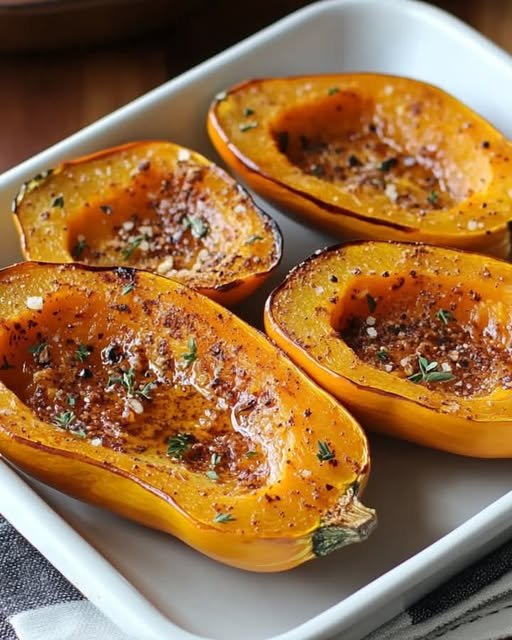
Roasted Honeynut Squash
If you’re looking for a simple fall side dish packed with natural sweetness and cozy flavor, this Roasted Honeynut Squash recipe is one to try. Honeynut squash is a small winter squash with a naturally sweet, rich flavor that becomes even more delicious when roasted in the oven. With tender centers, golden caramelized edges, and a light coating of olive oil, maple syrup, and warm spices, every bite is full of flavor.
This easy recipe requires only a handful of ingredients and minimal preparation. You don’t need complicated techniques or special equipment—just a sharp knife, a baking sheet, and a hot oven.
Roasted honeynut squash pairs beautifully with roasted chicken, pork, turkey, grain bowls, salads, and other fall favorites. You can also serve it as a vegetarian side dish for holiday dinners or enjoy it on its own as a wholesome, satisfying meal.
Why You’ll Love This Roasted Honeynut Squash Recipe
- Naturally sweet: Honeynut squash has a rich, sweet flavor that deepens during roasting.
- Easy to prepare: A few simple ingredients create a delicious side dish.
- Beautifully caramelized: High oven heat helps develop golden edges and tender centers.
- Perfect for fall: Warm spices and maple syrup make it ideal for cozy seasonal meals.
- Versatile: Customize it with savory herbs, spicy seasonings, or crunchy toppings.
- Healthy and satisfying: Squash provides fiber and nutrients, including beta-carotene.
Ingredients
This recipe serves approximately 4 people.
- 2 small honeynut squash
- 2 tablespoons olive oil
- 1 tablespoon pure maple syrup
- ½ teaspoon ground cinnamon
- ½ teaspoon garlic powder
- ½ teaspoon salt, or to taste
- ¼ teaspoon freshly ground black pepper
- ¼ teaspoon smoked paprika, optional
- 1 teaspoon fresh thyme leaves, optional
Optional Toppings
- 2 tablespoons chopped pecans or walnuts
- 1 tablespoon pumpkin seeds
- 1 tablespoon crumbled feta or goat cheese
- 1 teaspoon chopped fresh parsley
- A small drizzle of extra maple syrup
Ingredient tip: Choose squash that feels firm and heavy for its size, with smooth skin and no soft spots. Maple syrup enhances the squash’s sweetness, while garlic powder and smoked paprika add a savory contrast.
How to Make Roasted Honeynut Squash
Step 1: Preheat the Oven
Preheat your oven to 425°F (220°C).
Line a large baking sheet with parchment paper or lightly grease it with olive oil. A hot oven is important because it helps the squash brown and caramelize rather than simply steam.
If you’re roasting several squash, use two baking sheets rather than crowding them together.
Step 2: Wash and Prepare the Squash
Rinse the honeynut squash under cool running water and dry thoroughly.
Place each squash on a stable cutting board. Carefully slice it lengthwise from stem to base using a sharp chef’s knife. Honeynut squash can have firm skin, so keep your fingers away from the blade and cut slowly.
Use a spoon to scoop out the seeds and stringy pulp from the center.
Do you need to peel honeynut squash? No. The skin is generally edible when cooked and becomes tender during roasting. If you prefer a softer texture or your squash has particularly tough skin, you can peel it before cutting.
Step 3: Cut the Squash
For a simple presentation, leave the squash halves intact. This method looks attractive and helps the flesh stay moist.
Alternatively, cut each half into approximately ¾-inch-thick slices or bite-sized cubes. Smaller pieces develop more caramelized edges and cook faster.
Try to keep the pieces similar in size so they roast evenly.
Step 4: Prepare the Seasoning
In a small bowl, whisk together the olive oil, maple syrup, cinnamon, garlic powder, salt, black pepper, and smoked paprika if using.
The olive oil helps the squash brown, while the maple syrup encourages caramelization. Cinnamon adds warmth without overpowering the squash’s natural flavor.
For a more savory version, leave out the maple syrup and cinnamon and use olive oil, garlic, thyme, salt, and pepper instead.
Step 5: Coat the Squash
Place the squash halves or pieces in a large bowl.
Pour the seasoning mixture over the squash and toss until every surface is lightly coated. If you’re roasting halves, brush the cut surfaces generously with the mixture.
Arrange the squash on the prepared baking sheet in a single layer. For halves, place them cut-side down to encourage browning against the pan. For cubes or slices, leave space between pieces so moisture can escape.
Step 6: Roast Until Tender
Place the baking sheet in the preheated oven.
For halved squash, roast for approximately 25–35 minutes. For cubes or slices, roast for approximately 20–30 minutes, depending on their size.
If roasting pieces, flip them halfway through cooking to encourage even browning.
The squash is ready when the flesh is fork-tender and the edges are golden brown. Larger halves may need a few extra minutes.
Avoid relying on time alone. Squash size, thickness, and oven performance can all affect cooking time.
Step 7: Add Fresh Herbs and Toppings
Remove the squash from the oven and allow it to rest for a few minutes.
Sprinkle with fresh thyme or parsley if desired. For added texture, top with chopped pecans, walnuts, or pumpkin seeds.
If you want a sweeter finish, add a light drizzle of maple syrup just before serving. For a savory-sweet combination, crumble a little feta or goat cheese over the warm squash.
Step 8: Serve Warm
Transfer the roasted honeynut squash to a serving platter.
Serve the halves as individual portions or arrange the roasted cubes in a bowl. Spoon any flavorful oil and caramelized juices from the baking sheet over the top.
Enjoy immediately while the squash is warm, tender, and lightly caramelized.
Tips for Perfect Roasted Honeynut Squash
Use a hot oven. Roasting at 425°F (220°C) helps develop caramelized edges and tender flesh.
Don’t overcrowd the baking sheet. Crowded squash releases moisture and may become soft instead of browned.
Cut evenly sized pieces. Similar sizes help the squash cook consistently.
Keep the skin on if you like. Honeynut squash skin is edible after roasting, so peeling is optional.
Watch the maple syrup. It can darken quickly at high heat. If the edges begin browning too much before the centers are tender, lower the oven temperature slightly or loosely cover the squash.
Season after roasting if needed. Taste before serving and add extra salt, pepper, or herbs to bring out the flavor.
Delicious Roasted Honeynut Squash Variations
Garlic Herb Honeynut Squash
Skip the cinnamon and maple syrup. Toss the squash with olive oil, minced garlic, fresh rosemary, thyme, salt, and black pepper for a savory side dish.
Maple Cinnamon Honeynut Squash
Combine olive oil, maple syrup, cinnamon, and a small pinch of nutmeg. Finish with toasted pecans for a cozy fall flavor.
Spicy Roasted Honeynut Squash
Add ¼–½ teaspoon cayenne pepper or chili powder to the seasoning. The gentle heat balances the squash’s natural sweetness.
Parmesan Roasted Honeynut Squash
Roast the squash with olive oil, garlic powder, and black pepper. Sprinkle grated Parmesan over the squash during the final 5 minutes of cooking.
Brown Butter Honeynut Squash
Roast the squash with olive oil and salt, then drizzle it with a little browned butter and fresh sage after baking. This variation has a rich, nutty aroma.
Balsamic Honeynut Squash
Add a small drizzle of balsamic vinegar after roasting. Its tangy flavor balances the sweet, caramelized squash.
What to Serve With Roasted Honeynut Squash
Roasted honeynut squash works well with many main dishes and seasonal meals.
Try pairing it with:
- Roast chicken or turkey
- Garlic butter salmon
- Pork chops or roasted pork tenderloin
- Steak with herb butter
- Quinoa or wild rice
- Farro or couscous
- A spinach and goat cheese salad
- Roasted Brussels sprouts
- Mashed potatoes
- Lentils or chickpeas
For a satisfying vegetarian bowl, combine roasted squash with quinoa, chickpeas, baby spinach, toasted pumpkin seeds, and a lemon-tahini dressing.
For a holiday dinner, serve it alongside turkey, stuffing, green beans, and cranberry sauce.
Storage and Reheating Instructions
Refrigerator
Allow leftover squash to cool, then transfer it to an airtight container. Refrigerate for up to 4 days.
Freezer
You can freeze roasted honeynut squash for up to 3 months for best quality. Cool it completely, arrange the pieces on a tray until firm, then transfer them to a freezer-safe bag or container.
The texture may become softer after thawing, so frozen squash works especially well in soups, purées, and grain bowls.
Reheating
For the best texture, reheat the squash in an oven at 375°F (190°C) for 8–12 minutes, or until heated through.
You can also reheat it in an air fryer at 350°F (175°C) for approximately 4–7 minutes, checking frequently to prevent the edges from burning.
Microwaving is convenient but may make the squash softer.
Frequently Asked Questions
What does honeynut squash taste like?
Honeynut squash has a naturally sweet, nutty flavor similar to butternut squash, often with a richer taste. Roasting intensifies its sweetness and creates caramelized edges.
Do I need to peel honeynut squash before roasting?
No. Its skin is generally edible after cooking and becomes tender when roasted. Wash the squash well and remove the seeds before cooking.
Can I roast honeynut squash without maple syrup?
Absolutely. Olive oil, salt, pepper, garlic, and fresh herbs are enough to create a flavorful savory version. The squash is naturally sweet even without added sweetener.
Why is my roasted squash soggy?
Soggy squash usually results from overcrowding the pan or roasting at a temperature that’s too low. Spread the pieces in a single layer and leave space between them so moisture can escape.
Can I prepare honeynut squash ahead of time?
Yes. Wash, halve, and seed the squash a day ahead, then refrigerate it in a covered container. You can also mix the seasoning in advance. For the best caramelization, roast the squash shortly before serving.
Is honeynut squash the same as butternut squash?
No. Honeynut squash is a smaller winter squash with a deeper orange flesh and a naturally sweet, concentrated flavor. Butternut squash can be used as a substitute, although its larger size and slightly different texture may require adjustments to the cooking time.
Final Thoughts
This Roasted Honeynut Squash recipe proves that a simple vegetable can become a standout side dish with just a few ingredients. The squash turns tender and sweet in the oven, while olive oil, warm spices, and maple syrup create a delicious balance of savory flavor and caramelized edges.
Whether you serve it for a weeknight dinner, add it to a grain bowl, or feature it on your holiday table, roasted honeynut squash is easy to customize and simple to prepare. Try it with fresh thyme and pecans for a seasonal touch, or keep it classic with garlic, olive oil, salt, and pepper. Either way, it’s a delicious way to enjoy winter squash.

Madison Kate is a content writer and digital journalist based in the United States, specializing in global politics, technology, finance, and trending world news. She is the lead writer at The World Point, where she has published extensively on international affairs, emerging technologies, economic trends, and current events.